How to Solve a Train Tracks Puzzle: Rules and Easy Steps
In a train tracks puzzle you draw one unbroken track from START on the left edge to END on the bottom edge. The numbers beside each row and column say how many squares in that line hold track, and the track never crosses or branches.
Step by step
- Read the numbers. The number beside each row and above each column is how many of its squares contain track.
- Mark the zeros and full lines. A row or column marked 0 has no track, so cross out every square. A line whose number equals its length is completely filled with track.
- Find START and END. The track enters at START on the left edge and leaves at END on the bottom edge. Squares next to them must connect to the edge.
- Follow the drawn pieces. Each piece already drawn shows track going straight or around a curve. Extend it into the next square.
- Join squares that have only two choices. If a square must hold track and only two of its neighbors can be reached, the track connects those two.
- Count as you go. When a row or column reaches its number, cross out its remaining squares. When the squares left equal the number still needed, fill them all.
- Check the whole track. The finished track is one unbroken line from START to END, with no branches, no crossings and every number matched.
Why people like them
Train tracks puzzles are pure logic with no writing in words, so they suit anyone who likes sudoku or crosswords but wants something different. Every puzzle here has exactly one answer, so you never have to guess.
Free printables to try
Print at home on regular paper. Free for personal, family and group use.
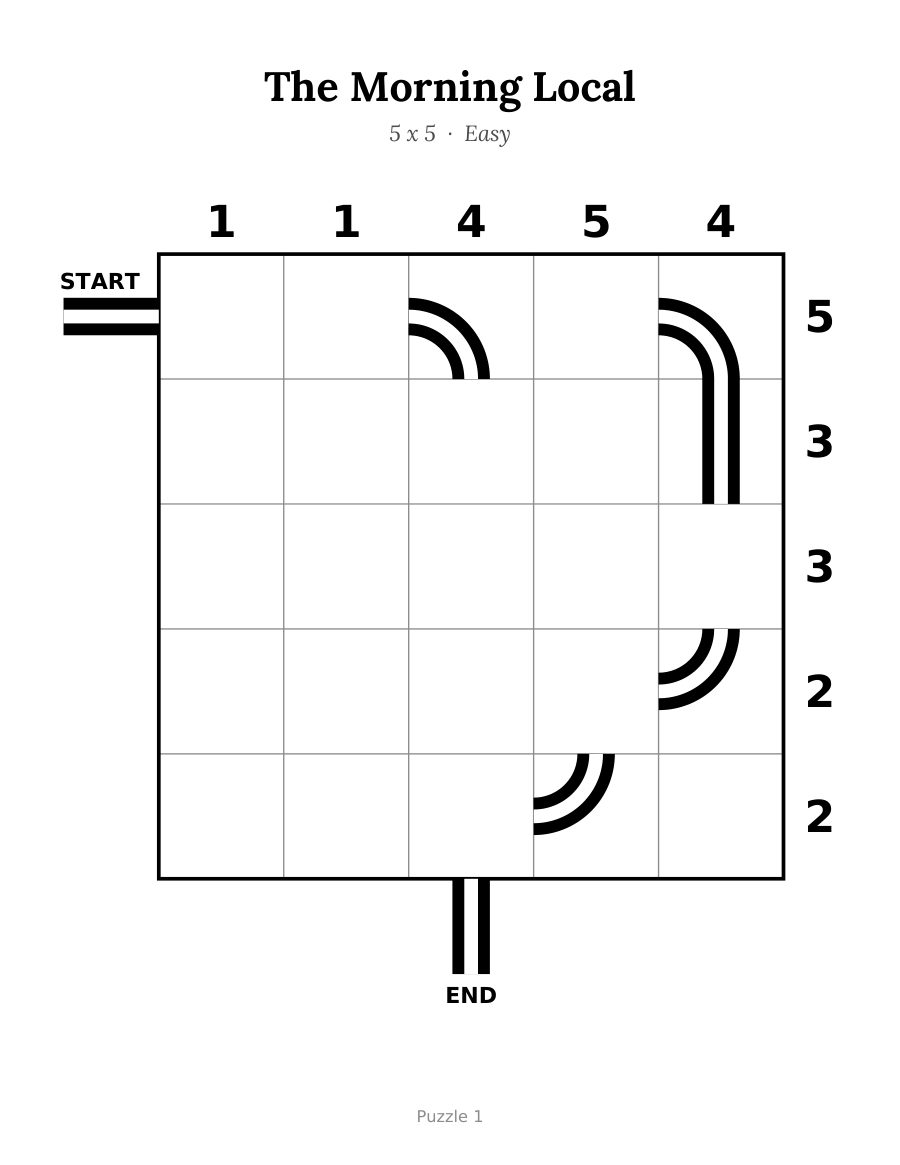 Free Train Tracks Logic Puzzles for Adults (Printable PDF)7-page PDF, free
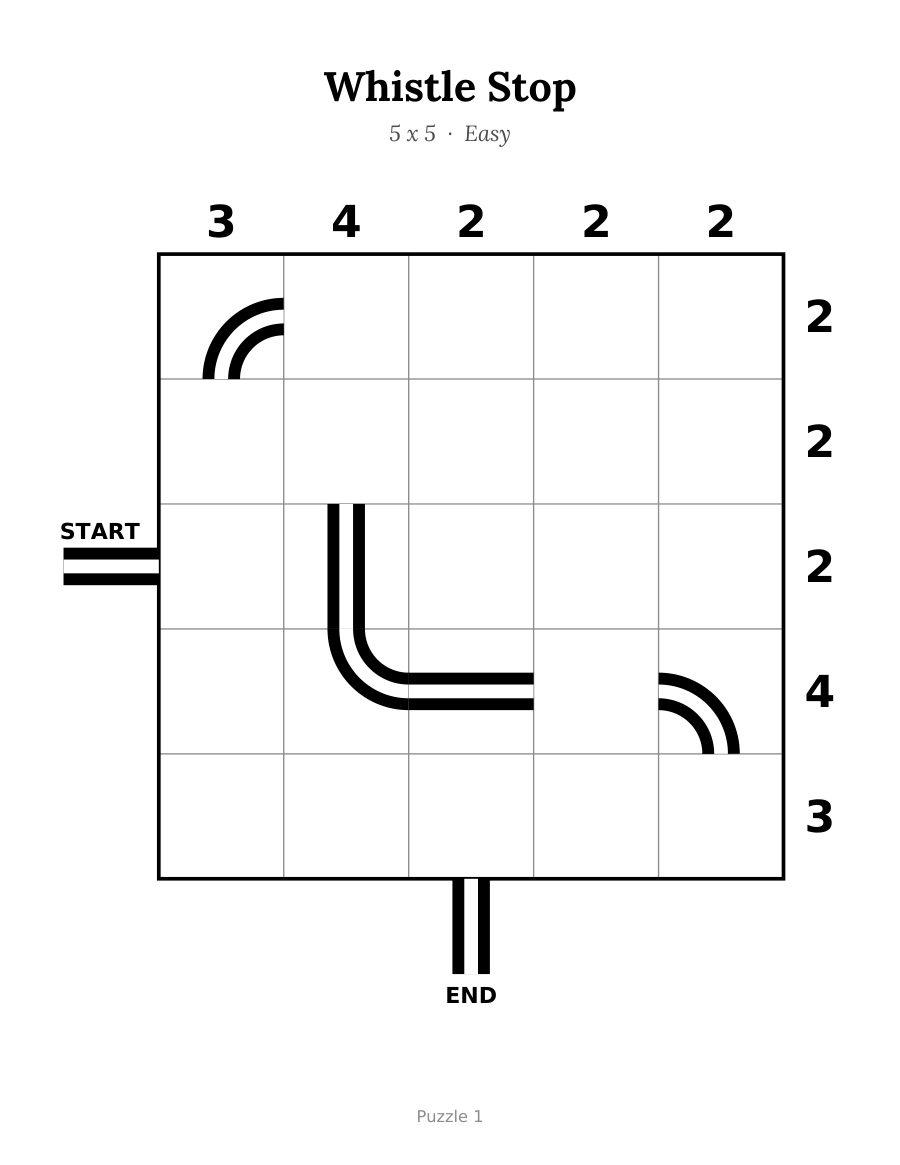 Large Print Train Tracks Puzzles for Seniors: Six Easy Puzzles to Print9-page PDF, free
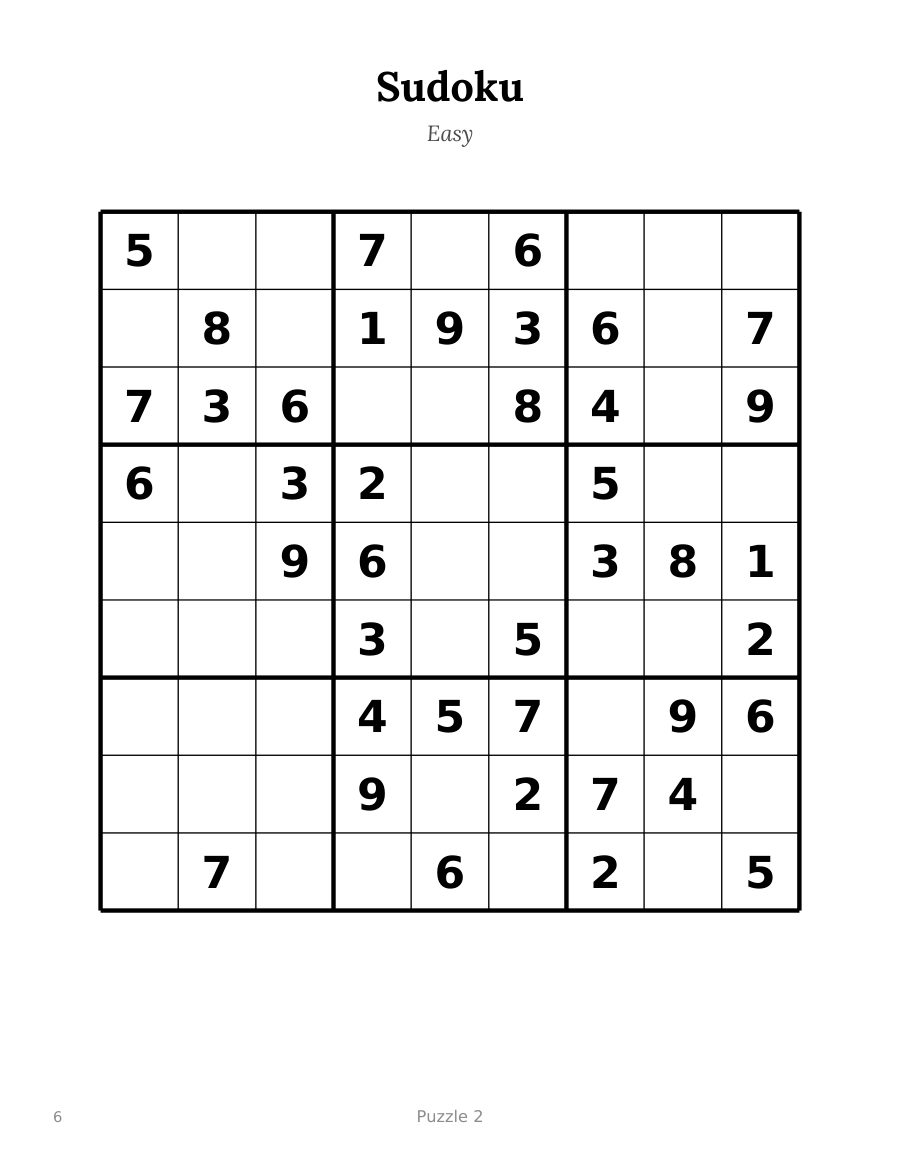 Free Large Print Sudoku for Seniors (Printable)5-page PDF, free
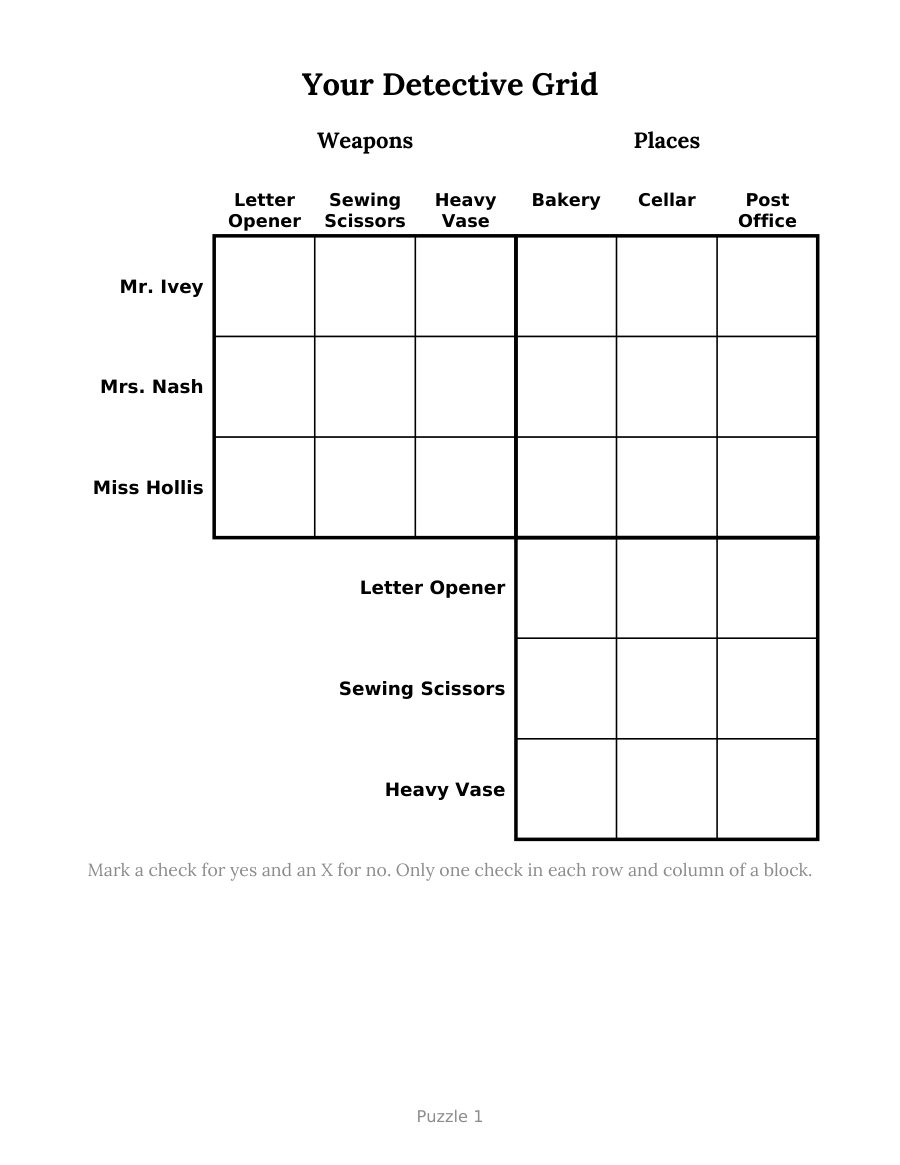 Free Murder Mystery Logic Puzzle to Print: The Church Bazaar Mystery5-page PDF, free
Questions
What are the rules of train tracks puzzles?
Draw one unbroken track from START to END. The numbers say how many squares in each row and column hold track. The track cannot cross itself or branch.
Do train tracks puzzles have only one solution?
Ours do. A computer checked every puzzle for exactly one answer, and each can be solved by logic alone.
Are they hard?
They range from easy 5 by 5 grids to hard 7 by 7 grids. Begin with the easy ones to learn the pattern.